Perfecting the Carry-On: Packing Strategies for a Long Weekend Trip
Packing for a long weekend trip often presents a familiar challenge: balancing the desire to bring options with the constraints of a small carry-on. Many travellers have experienced the frustration of trying to fit several days’ worth of clothing into a limited space, only to find themselves overpacked or underprepared. However, with a few systematic approaches, it is possible to organise a compact and efficient wardrobe that covers all planned activities without exceeding airline size restrictions.
The key lies in adopting a methodical mindset. This article explores two complementary strategies: the use of packing cubes and the rolling technique. Both methods are designed to maximise space, minimise wrinkles, and keep belongings organised throughout the journey. By understanding how these approaches work individually and together, travellers can make informed decisions about their packing process. The goal is not to prescribe a single right way, but to offer practical options that can be adapted to individual needs and preferences.
Understanding the Long Weekend Wardrobe
Before diving into specific techniques, it is helpful to consider the typical clothing requirements for a three-day trip. Most travellers plan for a mix of activities, which might include daytime exploration, casual dining, and perhaps a slightly dressier evening event. The challenge is to cover these varied scenarios without resorting to a separate outfit for every hour. A common approach is to build a capsule wardrobe, where each piece can be mixed and matched to create multiple outfits. Neutral colours and versatile layers often work well in this context, as they allow for greater flexibility with fewer items.
To structure the packing list, it is useful to think in terms of categories: tops, bottoms, undergarments, sleepwear, and footwear. For a three-day trip, a typical list might include two to three tops, two bottoms, one lightweight layering piece (such as a cardigan or jacket), and appropriate undergarments. Footwear can be tricky, as shoes tend to consume significant space. Selecting one pair of comfortable walking shoes and one pair of dressier options, if necessary, often proves sufficient. By defining the essentials in advance, the packing process becomes more systematic and less stressful.
The Rolling Technique: Maximising Space and Minimising Wrinkles
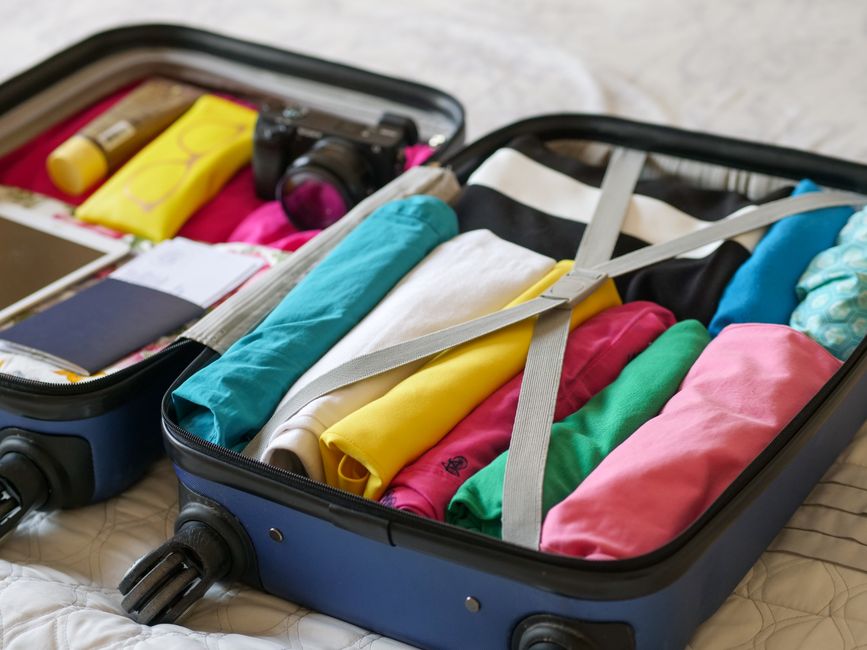
The rolling technique is a widely acknowledged method for packing clothes more efficiently. Unlike traditional folding, which creates flat layers, rolling involves tightly rolling each garment into a cylindrical shape. This approach offers several practical benefits. First, it reduces the air space between fibres, allowing more items to fit into a given volume. Second, it helps prevent deep creases because the fabric is not bent at sharp angles for an extended period. Third, rolled items are easier to see and access, as they can be arranged in rows or stacked, enabling visual organisation.
To execute the rolling technique effectively, one should start with a clean, flat surface. Garments such as t-shirts, casual trousers, and skirts are particularly suited for rolling. For dress shirts, a hybrid approach may be necessary, as rolling them tightly can create unwanted wrinkles on the collar and placket. In those cases, folding the shirt neatly and placing it on top of rolled items is a common compromise. The overall goal is to create compact, uniform cylinders that can be packed snugly together, leaving minimal wasted space.
The Role of Packing Cubes: Structure and Organisation
Packing cubes are rectangular fabric containers that come in various sizes and are designed to compartmentalise clothing within a suitcase. They serve a dual purpose: they help organise items by category or day, and they compress contents when the cube is zipped, which can save additional space. While rolling clothes already contributes to space efficiency, packing cubes add a layer of structure that simplifies the packing and unpacking process.
When using packing cubes, the rolling technique pairs seamlessly with them. One can roll garments and stack them neatly inside a cube, either individually or by rolling and then layering them. The cubes themselves can then be arranged in the carry-on, often leaving room at the top for non-clothing items. This approach also aids in maintaining order during the trip, as each cube can be designated for a specific purpose—such as tops, bottoms, or undergarments—allowing travellers to locate items without rummaging through the entire bag. Furthermore, if a security check requires removal of liquids or electronics, cubes can be lifted out as a group, streamlining the process.
Applying Methods to a Packing Cube Set
Bright Ideas Daily, a company known for its practical travel accessories, offers a range of packing cube sets designed to suit various trip lengths. A typical set includes multiple cubes of different sizes, which can be used to segregate clothing types. For a long weekend, a common configuration might involve using a large cube for tops, a medium cube for bottoms, and a small cube for undergarments and accessories. This systematic division aligns with the principles of both organisation and space utilisation.
In practice, the process would involve rolling each top and placing them side by side inside the large cube. If the cube is not completely filled, one might add a lightweight scarf or an additional layer to make full use of the space. Similarly, bottoms can be rolled and stacked in the medium cube. The small cube is ideal for items like socks, underwear, and perhaps a pouch for chargers or other small essentials. By allocating each cube a specific role, the traveller can maintain a clear overview of their belongings and avoid having to unpack everything at each destination.
Additional Strategies for a Compact Carry-On
Apart from rolling and using packing cubes, several supplementary methods can enhance the efficiency of a carry-on packing process. One such method is the utilisation of empty spaces within shoes. Socks, belts, or small travel accessories can be tucked inside shoes, not only making use of dead space but also helping shoes retain their shape. Another consideration is the choice of outerwear; rather than packing bulky jackets, travellers may wear them onto the plane or tie them around their waist when not needed. This can free up considerable room inside the bag.
Layering outfits also contributes to space savings. Instead of packing separate heavy sweaters, a few thin layers that can be worn together offer more flexibility and can be packed more compactly. Fabric choice matters; materials like merino wool or technical fabrics tend to be lightweight, breathable, and wrinkle-resistant, which can reduce both bulk and the need for ironing. When it comes to liquids and toiletries, adhering to airline regulations and using travel-sized containers is essential, but it also encourages a minimalist approach that aligns with the carry-on philosophy.
Finally, it is important to consider the overall weight distribution within the bag. Placing heavier items, such as shoes or electronics, at the bottom or near the wheels (if using a wheeled case) can make the bag easier to manage. Balancing weight across sides can also prevent the bag from toppling over or straining the shoulders when worn as a backpack. These considerations, combined with the rolling and cube methods, work together to create a well-organised and manageable pack.
Effective packing is not about eliminating options, but about orchestrating the available space to accommodate a versatile wardrobe with minimal fuss.
Refining Your Packing Process
As with any skill, refining a packing routine takes practice. It is helpful to conduct a trial pack before the actual trip, allowing time to experiment with different arrangements and see what works best for the specific items one intends to bring. Some travellers find it beneficial to create a checklist of categories and ensure that the total volume of items fits within the dimensions of their carry-on. This pre-trip rehearsal can also highlight any unnecessary items that can be left behind, further streamlining the final pack.
Reusable packing cubes prove their value repeatedly, as they can be washed and reused for many journeys. Over time, one might develop a favourite set of techniques—perhaps rolling most garments but folding delicate items, or grouping by outfit rather than by type. The flexibility of these methods allows for personalisation, meaning that the process can be tailored to one’s own comfort and style preferences. The ultimate goal is to arrive at a packing method that feels effective, reduces the stress of last-minute decisions, and ensures that all essential clothing is available when needed.