Diwali: The Festival of Lights and Its Heartwarming Customs
Diwali, widely known as the Festival of Lights, stands as one of the most significant and widely observed celebrations in Hindu culture, and its influence has spread across the globe. In the United Kingdom, where diverse communities thrive, Diwali has become a vibrant part of the autumn calendar, illuminating homes and public spaces with its distinctive warmth. This article aims to provide a comprehensive overview of Diwali, exploring its historical roots, the customs that define it, and the symbolic meanings behind its rituals.
At its core, Diwali is a five-day festival that symbolizes the triumph of light over darkness and good over evil. The name itself is derived from the Sanskrit word ‘Deepavali’, meaning ‘row of lights’, which aptly describes the central practice of lighting oil lamps, or diyas, to welcome prosperity and happiness. While the festival has deep religious significance for Hindus, it is also celebrated by Jains, Sikhs, and some Buddhists, each attaching their own legends and observances. This rich tapestry of traditions makes Diwali a fascinating subject for cultural exploration.
The Origins and Legends of Diwali
Understanding Diwali involves delving into a collection of myths and historical narratives that vary across regions. The most widely recognized legend in Northern India associates Diwali with the return of Lord Rama to his kingdom of Ayodhya after a fourteen-year exile, during which he defeated the demon king Ravana. The citizens welcomed him by lighting rows of clay lamps, thus igniting a tradition that continues today. This story emphasizes themes of duty, righteousness, and the restoration of order.
In Southern India, Diwali often commemorates the victory of Lord Krishna over the demon Narakasura, a tale that reinforces the idea of divine intervention in the face of tyranny. For Sikhs, Diwali holds special significance as the day when Guru Hargobind Ji was released from imprisonment, symbolizing freedom and justice. Jains celebrate Diwali as the time when Lord Mahavira attained nirvana. These varying narratives share a common thread: the celebration of light, knowledge, and liberation from darkness.
From a historical perspective, Diwali is also linked to the harvest season, as it typically occurs in late October or early November, coinciding with the end of the monsoon and the beginning of winter. This agricultural connection highlights the festival’s role in marking a period of rest and thankfulness after the year’s labors. Over centuries, these layers of meaning have coalesced into a festival that is both spiritually profound and culturally unifying.
The Five Days of Diwali: A Chronological Journey
Diwali is not a single-day event but a multi-day observance, each day carrying specific rituals and purposes. The festival usually spans five days, with the third day being the main Diwali celebration. The first day, known as Dhanteras, is dedicated to wealth and prosperity, with families purchasing gold, silver, or new utensils as a sign of good fortune. Many also perform a special prayer to Lakshmi, the goddess of wealth, on this day.
The second day, Naraka Chaturdashi or Choti Diwali, involves morning rituals and festive breakfasts. It is believed that on this day, Lord Krishna defeated Narakasura, and thus early rise, oil baths, and wearing new clothes are common practices. The third day, the main Diwali, is when the central ceremonies take place: homes are adorned with diyas, rangoli designs are created, and family gatherings reach their peak. Evenings are typically reserved for Lakshmi Puja, a prayer seeking blessings for prosperity and well-being.
The fourth day, Govardhan Puja or Annakut, celebrates the bond between humans and nature, referencing Lord Krishna’s act of lifting Mount Govardhan to protect villagers from torrential rains. Food offerings and community feasts are common. The fifth and final day, Bhai Dooj, honors the sibling bond, with sisters inviting brothers to their homes for a meal and applying a tilak on their foreheads. Each of these days carries distinct social and spiritual weight, contributing to the festival’s rich complexity.
Oil Lamps and Rangoli: The Art of Light and Colour
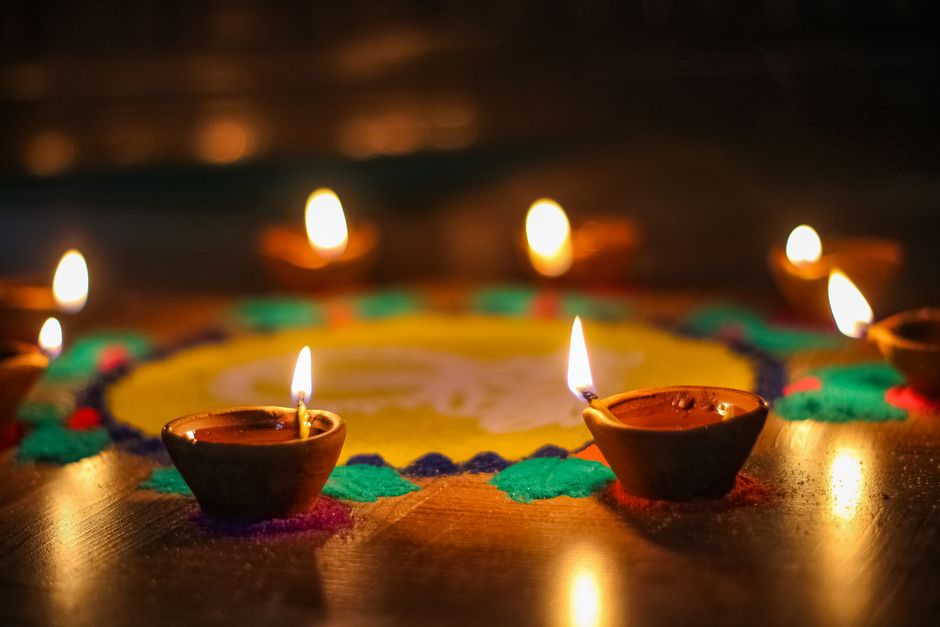
Perhaps the most iconic imagery of Diwali is the rows of oil lamps, or diyas, placed along windowsills, doorways, and courtyards. Typically made of clay, these lamps are filled with oil and a cotton wick, producing a warm, steady flame. The act of lighting diyas is done with care and precision, symbolizing the dispelling of ignorance and the ushering in of knowledge. In contemporary settings, electric lights and candles have also become popular, but the traditional diya retains its central place in many homes.
Complementing the lamps is the art of rangoli, which involves creating intricate patterns on floors or tabletops using colored powders, flower petals, or sand. These designs often feature geometric shapes, floral motifs, and depictions of peacocks or other symbols of auspiciousness. Creating rangoli is a communal activity, often involving family members, and it serves as both decoration and a means of welcoming guests. The vibrant colors used are believed to bring positive energy and are an expression of creativity and devotion.
The practice of decorating with diyas and rangoli is not merely aesthetic but carries deep meaning. The light from the lamps is thought to guide the goddess Lakshmi into the home, while the colorful patterns are intended to bring happiness and ward off evil spirits. In the UK, many community centers and public spaces host Diwali light displays and rangoli competitions, reflecting the festival’s appeal beyond the Indian diaspora. These art forms have become integral to the sensory experience of Diwali, engaging both the eyes and the spirit.
Sweets and Sharing: The Culinary Delights of Diwali
Food plays a central role in Diwali celebrations, with an array of sweet treats, or mithai, being prepared and shared among family, friends, and neighbors. Traditional confections include besan ladoo (chickpea flour balls with ghee and sugar), barfi (a milk-based fudge often flavored with cardamom), and gulab jamun (deep-fried milk solids soaked in a sugary syrup). These sweets are not just desserts but are symbolic of the joy and generosity associated with the festival.
The preparation of these delicacies often begins days in advance, with households making large batches to distribute. Gift exchanges, particularly of sweets and dry fruits, are customary, reflecting the spirit of community and goodwill. In the UK, Indian sweet shops see a surge in demand during Diwali, and many supermarkets now stock festive treats. For those who prefer to bake at home, recipes are widely available, enabling families to maintain traditions in their own kitchens.
Beyond sweets, savory snacks like samosas and chivda (a spiced mix of flattened rice) are also popular. Sharing food is an expression of love and respect, breaking barriers and fostering a sense of belonging. Diwali meals often bring together diverse groups, echoing the festival’s message of unity in diversity.
The heart of Diwali lies in the simple act of sharing light and sweetness with others.
Diwali in the UK: A Cross-Cultural Celebration
As the UK is home to a significant South Asian population, Diwali has become a prominent event in the British cultural landscape. Leicester, in particular, is renowned for hosting one of the largest Diwali celebrations outside India, featuring a grand lights switch-on event and a vibrant street fair. In London, Trafalgar Square often hosts a Diwali festival, with performances, food stalls, and community activities, attracting people from all backgrounds.
These public celebrations are supplemented by private gatherings where families observe their own rituals in the home. Many schools in the UK now include Diwali in their curriculum, teaching children about its significance and customs. This inclusivity fosters a broader understanding and appreciation of cultural diversity, aligning with the British ethos of multiculturalism.
For those experiencing Diwali for the first time, participating can be a lesson in history, art, and community. The festival’s themes of light and renewal resonate universally, making it a celebration that transcends religious boundaries. In the UK, Diwali has evolved to embrace both traditional practices and modern interpretations, ensuring its continuity for future generations.
In conclusion, Diwali is a festival rich in history, symbolism, and communal warmth. From the lighting of oil lamps to the intricate patterns of rangoli and the sharing of sweet treats, each custom is imbued with meaning. As it continues to be celebrated with enthusiasm in the UK, Diwali offers a window into a vibrant cultural heritage that values illumination and togetherness.